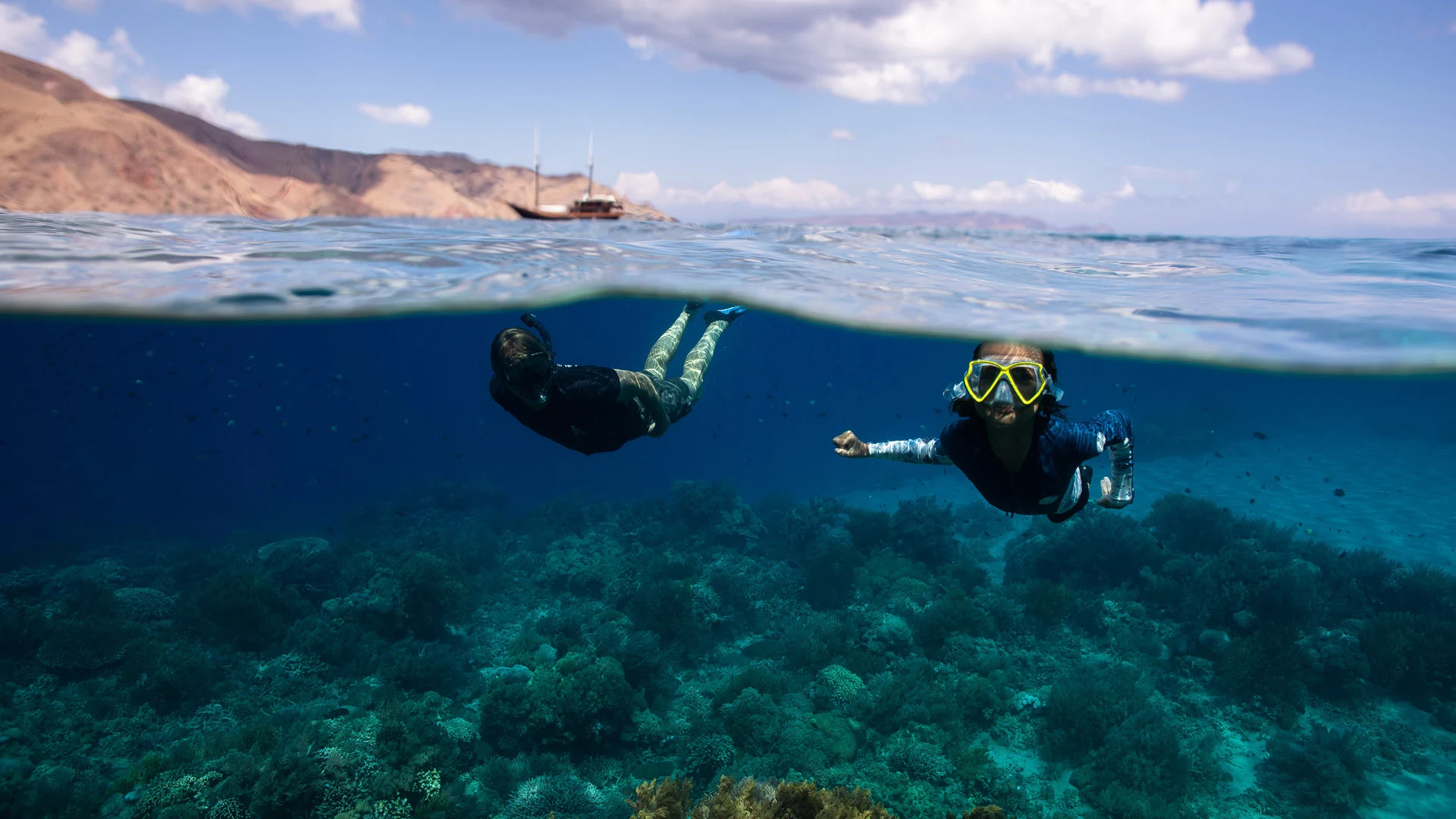
For many travelers, this is the moment Komodo National Park becomes more than a beautiful island destination. It becomes an unforgettable encounter with one of the ocean’s most extraordinary creatures.
Located in the waters surrounding Labuan Bajo, Komodo National Park is famous for its dramatic islands, legendary Komodo dragons, and extraordinary marine biodiversity. Beneath its spectacular landscapes lies a fascinating underwater world where giant manta rays, sea turtles, colorful coral reefs, and countless marine species thrive.
Among these experiences, Manta Point is one of the signature snorkeling destinations of Komodo sailing trips, regularly featured in both Open Trip and Private Charter itineraries.
But what makes this place so special? Why do manta rays gather around certain reefs? When is the best season to encounter them? And how can you experience these gentle giants responsibly?
This guide explores the remarkable world of manta rays in Komodo and everything you should know before experiencing this extraordinary underwater adventure.
Meet the Gentle Giants of Komodo
The reef manta ray (Mobula alfredi) is one of the largest reef-associated rays in the world. Despite its impressive size, this marine animal is harmless to humans and feeds primarily on plankton and other small organisms suspended in seawater.
Unlike many marine predators, manta rays do not hunt large fish. Instead, they use specialised filtering structures inside their mouths to capture microscopic food from the water.
Their distinctive cephalic fins, located on either side of the mouth, help guide plankton-rich water toward their mouths while feeding.
One of the most fascinating features of manta rays is the pattern of spots on their underside. These markings are unique to each individual, much like fingerprints in humans. Researchers use these patterns to identify manta rays, monitor their movements, and study their populations over time.
In Komodo, this research has revealed that manta rays are not simply passing through randomly. Many individuals repeatedly return to particular locations, making certain reefs especially important to their lives.
Manta Point Komodo and the Extraordinary Underwater Experience
Manta Point, commonly associated with Karang Makassar, is among the most recognised manta ray destinations in Komodo National Park.
Unlike a beach or island viewpoint, Manta Point is an underwater reef area where manta rays may gather to feed, visit cleaning stations, or move through the surrounding waters.
Its location in central Komodo makes it an important stop for travelers exploring the national park by boat.
Manta Point on Komodo Open Trip
For many travelers, Manta Point is one of the most memorable highlights of a Komodo Open Trip.
On Bajo Explore’s standard multi-day Komodo sailing experience, Manta Point is one of the principal snorkeling destinations, alongside iconic locations such as Padar Island, Pink Beach, Komodo Island, and other beautiful snorkeling spots.
The experience is not simply about reaching another destination. It is about entering a marine environment where manta rays naturally move through the water.
Guests may have the opportunity to observe manta rays while snorkeling, depending on their presence and the conditions at the site.
Manta Point on Komodo Private Charter
Manta Point is also an important destination for Komodo Private Charter experiences.
A private sailing journey offers a more personal atmosphere, making it especially attractive to couples, families, photographers, and travelers who want to explore Komodo with their own group.
Depending on the selected itinerary, weather, tidal conditions, and operational arrangements, the boat may visit manta ray habitats as part of the journey.
Private charters can offer greater flexibility in planning the trip, but they cannot guarantee manta ray sightings or override safety restrictions.
Important: Manta Point is a regular highlight of many Komodo sailing experiences, but entering the water is always subject to current conditions and the captain’s safety decision.
Why Do Manta Rays Gather at Manta Point?
Seeing several manta rays in one location can seem mysterious. In reality, their gatherings are often connected to the availability of food, reef cleaning stations, and favourable ocean conditions.
1. A Natural Feeding Ground
Manta rays are filter feeders. They consume plankton and other microscopic organisms suspended in seawater.
Komodo’s powerful ocean circulation transports nutrients through the national park, creating conditions that support a rich marine food web.
When plankton becomes concentrated in particular areas, manta rays may gather to feed.
During feeding, manta rays can swim with their mouths open, filtering food from the water through specialised structures inside their mouths.
Sometimes they move in circles or follow particular current lines where food is concentrated.
These feeding behaviours are among the most fascinating things to observe underwater.
2. Cleaning Stations Where Small Fish Help Giant Mantas
One of the most interesting manta ray behaviours is visiting a cleaning station.
A cleaning station is a specific reef area where small fish remove parasites and dead skin from larger marine animals.
Manta rays may approach these locations and slow down while cleaner fish work around their bodies.
Sometimes they hover above the reef or make repeated passes through the same area.
Imagine a giant manta ray returning to the same reef while tiny fish move around its enormous body. What appears to be a simple underwater encounter is actually a fascinating relationship between different marine species.
This behaviour demonstrates how coral reefs function as living ecosystems, supporting interactions that are essential to marine life.
3. Powerful Ocean Currents Support Marine Life
Komodo National Park lies within a complex network of ocean passages connecting the Indian Ocean and the Indonesian archipelago.
Water moves through these passages according to tides, geography, and seasonal ocean circulation.
These currents transport nutrients and plankton, helping support Komodo’s exceptional marine biodiversity.
However, the same currents can create challenging conditions for snorkeling.
At Manta Point, the water may move quickly and change direction. This is why experienced local guides carefully assess conditions before allowing guests to enter the water.
Where Else Can You See Manta Rays in Komodo?
Although Manta Point is the most familiar manta ray destination for many sailing guests, it is not the only habitat where these animals can be found.
Scientific research has identified several important manta ray locations in Komodo National Park, including Karang Makassar, Mawan, Manta Alley, and Cauldron.
Each location offers a different underwater environment.
Mawan and Its Remarkable Manta Habitat
Mawan is another recognised manta ray habitat in central Komodo National Park.
Interestingly, Mawan and Karang Makassar are approximately five kilometres apart, yet research has found that individual manta rays can show different preferences for these neighbouring locations.
Some manta rays repeatedly return to particular sites, suggesting that each habitat may offer valuable opportunities for feeding, cleaning, or other activities.
At Mawan, visitors may encounter manta rays moving around reef structures or swimming through the surrounding water.
Although Mawan is an important location for manta research and wildlife encounters, it should not automatically be considered part of every standard sailing itinerary.
Manta Alley in Southern Komodo
Manta Alley is located in the southern part of Komodo National Park.
It is another important manta ray habitat, particularly interesting for travelers whose itineraries explore southern Komodo.
Research has documented strong site attachment among manta rays at Manta Alley, meaning some individuals repeatedly return to the same location.
The southern waters are influenced by seasonal oceanographic conditions, including upwelling during the southeast monsoon.
This makes Manta Alley particularly interesting from a marine ecology perspective.
However, its location means it is not automatically included in every Komodo Open Trip or Private Charter route.
When Is the Best Season to See Manta Rays in Komodo?
Manta rays can be encountered throughout the year in Komodo National Park.
However, their distribution and activity may change according to seasonal ocean conditions. Understanding these patterns can help travelers plan a more informed visit.
November to April During the Northwest Monsoon
During the northwest monsoon, nutrient-rich water influences the central region of Komodo National Park.
Research has documented seasonal changes in manta ray activity and habitat use at central locations, including Karang Makassar and Mawan.
This period can offer rewarding opportunities to observe manta rays, particularly when feeding conditions are favourable.
However, the northwest monsoon can also bring stronger winds, rain, and changing sea conditions. Some days may be unsuitable for visiting particular snorkeling locations.
May to October During the Southeast Monsoon
During the southeast monsoon, seasonal upwelling south of the Lesser Sunda Islands brings colder, nutrient-rich water into the southern region.
This process supports productive marine conditions and can influence manta ray movements between southern and central habitats.
Southern Komodo, including Manta Alley, becomes particularly interesting during this period.
Nevertheless, manta sightings remain unpredictable. Seasonal patterns influence the probability of encounters, not the certainty of seeing an animal.
So, What Is the Best Month?
For visitors specifically interested in manta rays at central Komodo locations such as Karang Makassar and Mawan, November to April can offer particularly promising opportunities.
However, manta rays are wild animals, and their movements depend on environmental conditions, food availability, and individual behaviour.
The best approach is to choose a trip that includes suitable manta ray habitats while remaining flexible about the experience.
What Is It Like to Snorkel with Manta Rays?
You do not need to be a scuba diver to experience manta rays in Komodo.
Snorkeling is one of the most accessible ways to observe these animals, particularly when they swim near the surface.
At suitable locations, guests may see manta rays gliding beneath them, feeding in the water column, or moving around reef structures.
For many travelers, watching a manta ray from the surface is already an unforgettable experience.
Is Snorkeling Suitable for Beginners?
Snorkeling with manta rays can be suitable for confident beginners when conditions are calm and appropriate supervision is available.
However, Manta Point is not always an easy snorkeling location.
The current can become strong, and guests may need to drift with the water rather than remain stationary.
For this reason, visitors should:
- Listen carefully to the snorkeling briefing.
- Wear a properly fitted life jacket when recommended or required.
- Stay close to the guide and follow the group’s instructions.
- Avoid entering the water when the current is too strong.
- Never attempt to swim against powerful currents.
- Return to the boat immediately when instructed.
Guests who are uncomfortable in the water can still enjoy the journey from the boat and observe the marine environment without snorkeling.
How to Choose a Komodo Trip for Manta Ray Encounters
If manta rays are one of the experiences you most want to enjoy in Komodo, choosing the right itinerary is important.
Komodo Open Trip
A Komodo Open Trip is an excellent choice for travelers who want to explore the national park while sharing the experience with other guests.
The standard multi-day sailing itinerary combines famous island destinations with snorkeling experiences.
Manta Point is one of the principal snorkeling highlights of the journey.
This option is suitable for solo travelers, couples, friends, and visitors looking for a practical way to explore Komodo.
Komodo Private Charter
A Komodo Private Charter offers a more private and personalised journey.
It is particularly suitable for families, couples, groups of friends, and travelers who prefer their own boat.
Manta Point can be included as an important snorkeling destination, subject to itinerary arrangements and safety conditions.
Private charters offer more flexibility in planning, but wildlife sightings remain unpredictable.
Explore Komodo Private Charter
Komodo Fast Boat
For travelers with limited time in Labuan Bajo, a Komodo Fast Boat trip provides an opportunity to explore several major destinations in a single day.
Depending on the selected route and operational conditions, manta ray snorkeling may be included alongside other iconic destinations.
Always confirm the actual itinerary before booking, especially if manta ray encounters are a priority.
Responsible Manta Ray Encounters
Manta rays are wild marine animals, and their natural behaviour should always be respected.
Responsible wildlife observation helps protect these extraordinary creatures and makes encounters more enjoyable for everyone.
When snorkeling or diving with manta rays:
- Never touch, chase, grab, or ride a manta ray.
- Maintain a respectful distance.
- Avoid blocking the animal’s swimming direction.
- Do not crowd manta rays from multiple directions.
- Avoid sudden movements or splashing.
- Keep your fins away from coral reefs.
- Follow your guide’s instructions at all times.
A manta ray encounter is most meaningful when the animal is free to behave naturally.
Fascinating Facts About Manta Rays in Komodo
- Every manta ray has unique markings. The spots on its underside can help researchers identify individual animals, much like fingerprints.
- Manta rays are filter feeders. They consume plankton and small organisms suspended in seawater.
- Manta rays can return to the same locations. Research in Komodo has documented strong site preferences among individual manta rays.
- Manta Point and Mawan are close, but different. Despite their geographical proximity, individual manta rays can show different preferences for these locations.
- Manta rays are not always feeding. They may also visit reefs for cleaning, cruising, and social interactions.
- Sightings are never guaranteed. Manta rays are wild animals whose movements depend on natural environmental conditions.
Frequently Asked Questions About Manta Rays in Komodo
Is Manta Point included in Komodo Open Trip?
Manta Point is one of the principal snorkeling destinations in Bajo Explore’s standard multi-day Komodo Open Trip itinerary. Actual snorkeling activity depends on weather, currents, and safety conditions.
Is Manta Point included in Komodo Private Charter?
Yes, Manta Point is an important destination that can be included in Komodo Private Charter itineraries. The route and snorkeling activity depend on the selected trip, sea conditions, and safety considerations.
What is the best place to see manta rays in Komodo?
Karang Makassar, commonly known as Manta Point, is among the most recognised manta ray locations in central Komodo National Park. Mawan and Manta Alley are also important manta ray habitats.
What is the best month to see manta rays in Komodo?
Manta rays can be encountered throughout the year. Seasonal conditions influence their distribution and activity, so the best location may change throughout the year.
Can I see manta rays without diving?
Yes. Snorkeling can provide excellent opportunities to observe manta rays when they swim near the surface. Scuba diving is not necessary.
Are manta rays dangerous?
Manta rays are generally harmless to humans and do not have the venomous tail stinger found in many other rays. However, strong ocean currents and changing sea conditions can create risks at manta ray locations.
Are manta ray sightings guaranteed on a Komodo trip?
No. Manta rays are wild animals, and no responsible operator can guarantee their presence at a particular location or time.
Discover Komodo’s Underwater Paradise with Bajo Explore
Komodo National Park is a destination where extraordinary beauty extends far beyond its islands.
Beneath the surface lies a remarkable marine world filled with coral reefs, sea turtles, manta rays, and countless fascinating underwater encounters.
Whether you are joining a shared sailing adventure or choosing a private boat for your own journey, Manta Point offers an opportunity to experience one of Komodo’s most remarkable marine habitats.
With Bajo Explore, you can discover Komodo through carefully planned sailing experiences from Labuan Bajo, combining iconic destinations, snorkeling opportunities, and the natural beauty of the national park.
Explore your Komodo journey:
- Komodo Open Trip
- Komodo Private Charter
- Komodo Fast Boat
- Best Snorkeling Spots in Komodo National Park
Planning your Komodo adventure?
Contact Bajo Explore to find the sailing experience that matches your travel plans and discover the extraordinary underwater world of Komodo National Park.
Beyond the Ordinary, Into Paradise.